

AUG 3rd, 2025
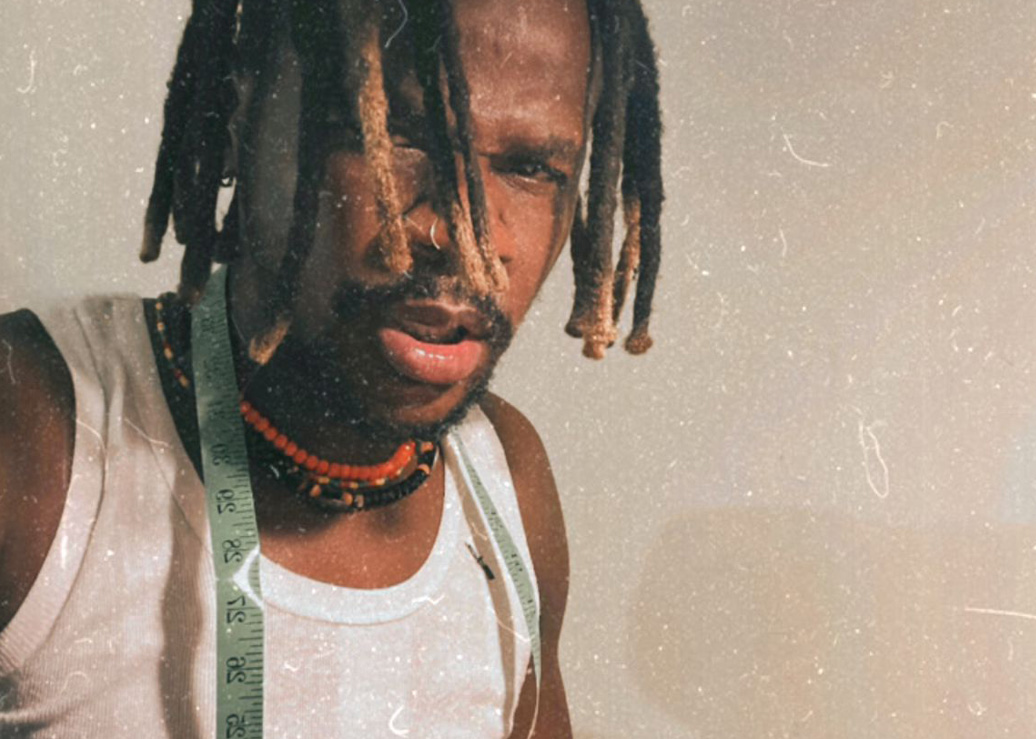
William McIntosh found his freedom in a box. From that most maligned receptacle sprung a new world’s worth of passions.
As introspection stocks rallied during the world’s gap years William found himself as immersed in the universal disquiet as anyone else, grew several visions, forming the crest of a wave of heart based expression as it bloomed.
McIntosh, in his incarnation as Williethefit, had the kind of new year on which careers are built.
While that box fit several luminaries of different statures since its conception, falling off the shoulders of soca’s tai pan on his return to the soca side of calypso in early 2025 lifted the profile of one of this country’s quietly prolific into a wider conversation.
This conversation, long overdue, catches us up to the William McIntosh story so far; an ever-evolving fever dream of aspiration, execution and a refusal to understand constraint.
William: My name is William Mcintosh. And my name is also Willy the Fit, for those who know me. I am a designer, clothing and fashion, a unisex type a deal. And I do events and I write and I enjoy life and I do what artists do I guess, so yeah, so we’re talking about the design today? We’re talking about the design today…
We’re talking about everything but recently you had a little coup in design we’ll call it a coup.
William: A coup right
Yeah You popped up in a kind of prominent place for carnival which is on Machel’s stage.
William: Yeah that was crazy how it happened…
How did that happen?
William: Well firstly the whole concept of that specific design was something that was started like early I would say 2019, it’s just this box concept that I wanted to experience with scuba. Big up Shania (Perez) the stylist, A good friend of mine. She was styling Machel among other artists this season and she reached out to me.
In the shade of the canopy behind his East Trinidad base, William and this interviewer peer into a bipolar dry season sky, a few cloud droplets (thanks CXC geography) threaten the flow, but we press on despite it.
William: In 2021, I met Shania through some mutual friends and I gave her one of my pieces from the collection, because I mean she always had style and she always had this…..vibes which I could admire being a designer.
She was styling these artists this season (Carnival 2025) and she reached out to me to create something from that concept for Machel, just to bring a sense of fashion and style.
The first job was the ‘Her Mudda’ video and I designed something like a structured scuba suit but you know it had this space vibes to it, this astronaut energy so we did that and Machel liked the vibes, people were talking about the fit. I mean, I worked a good few hours on it, last minute, to get it together.
We had some hiccups but everything happened organically and he wanted to use more fits, using the box t-shirt, throughout the season and contribute to the Pardy campaign.
Tell me about the box tee because it is not the first time that somebody latched on to it, somebody of prominence too latched on to the box t-shirt and go ‘this is mih shirt for a little while, I going and wear this.’
William: Yeah that’s what happened. So the box t-shirt came about in 2017.
This is the story; I had a dream and in this dream I felt, I remember how the dream felt, I remember what I saw and it was me being boxed in by myself and it didn’t feel like a nightmare it felt like a message you know what I mean.
When I woke up I was just trying to decipher the whole experience, and what I took away from it was: do not be boxed in, do not allow yourself to be boxed in by certain philosophies or people’s opinions.
Allow yourself to be free and to roam and have space and have life to experience new things, open up new doors, and just ride the beautiful new wave of life, especially living here in Trinidad and Tobago.
So I just wanted to create something and that is what came to me. I remember how the front of the silhouette looked like but I didn’t know exactly how everything else was going to pull together, the turtle neck, even that whole aspect of just being able to cover your face, and almost hide, like hiding away.
I woke up and I had some fabric there and I decided to make a sample.
All I knew at that time was how the front of it should look and everything else based on the knowledge I’ve obtained from garment construction allowed the rest to follow.
I did it and I just left it there for a while, a couple months. I didn’t know what to do with it na I just know it was kinda cool.
And I decided to, after a while of thinking and plotting and planning, I decided to create a website and see if I can contribute to the space of fashion or exist in a space or find a space or locate a space or welcome a space of what ‘fast fashion’ probably looks like to William McIntosh. My version of it.
So I did like 24 pieces, I created 24 pieces actually that was made in the factory. I sent them the sample and they made that and we did a nice campaign, along with Rael Luvi.
Then Covid came and everything was fucked, everything was destroyed.
You were designing, you were sewing, you had your own brand and you had your own clothing line. How’d you get your start in that, how it developed, where is it today and how you feel about it right now?
William: So I borrowed my mother’s sewing machine that she used to make curtains for Christmas and whatever because she doesn’t sew regularly only seasonally. I just wanted to start to sew something. I didn’t have the money for sewing classes.
I had a mentor Sean Griffith Perez I used to go by his shop and stand up and look at how he would cut and draft and stitch his couture pieces for his collections.
And I mean I was inspired and I decided to make a bow tie, that was the first thing. I did like these cool small GQ bowties if you will, the size, the textures, they were very classic. I started there.
I did some bowties for Angostura, I did some bowties for my personal…I sold, I always had, shit was crazy bro, I always had bowties on me in a zip lock bag.
Just walking with it…
William: Just walking with that shit, have it on me. At work, have it on me.
Bro I had it for the low $100, one of a kind, I had it on me bro. I remember working for this company I’d rather not mention the name, and I was doing deliveries for them.
I’ll tell you who after, but I was doing some deliveries for them so I used to like trap out (snicker) some ties to my coworkers.
I was using most of my salary to buy fabrics and at that time I couldn’t sew anything. So I would have looked for different people – seamstresses or tailors that could sew.
I would make shirts, shorts, some trousers. I would draw the design or buy the fabric and map it out for them and they would create it how I want.
And I used do these photo shoots, I used to document everything, that’s my start there. I remember I was on twitter that time posting and tagging local Soca artists – Kerwyn Dubois and Machel Montano and Kes and Bunji everybody.
I tagging everybody and Kes liked one of the things and I was like word? At that time it was just a dream.
What year that was?
William: That was like 2015, early 2015 but I was doing it since 2012, yeah so Kes reached out and I met him for the first time, real normal guy.
He was my first introduction to interacting with a soca artist along the lines of fashion and style and outfitting him at that time. It was a really important experience for me.
My first experience of not just dressing friends or family but seeing the potential of the style and intellectual property and where that could lead, where that could exist.
I feel you…
“As an artist and designer while you’re living your day to day and you’re going through your journey you would want certain things from your brand and I think that most times it’s kind of challenging going through that thing and let me tell you, only you can go through it.”
William: Weeks after I started to work with ‘Tunji (Olatunji Yearwood) in 2015 too and he was campaigning his song ‘Ola’ which is a big song, it won Soca Monarch that year.
And that was my first run of working with an artist for the whole season, sewing non-stop and backstage and vibes and fun. Every night you’re trying to top the last look because we out dey nah, you know ‘nobody cah say nothing’ type vibes.
It was just that time and we had fun with it.
Then I did the box t-shirts.
As an artist and designer while you’re living your day to day and you’re going through your journey you would want certain things from your brand and I think that most times it’s kind of challenging going through that thing and let me tell you, only you can go through it.
You could go through the ups and the downs and things not connecting and you have to ride the wave down and ride the wave up when it happens and be smart about everything that you do, be calculated, think.
Are there any other things in the background any new brands that you’re working on anything you’re interested in bringing out?
Willliam: I mean Backyard Bonfire
Tell me about backyard bonfire because you had one recently in collaboration with…
William: ….Modupe (Onilu, ½ of BoomBoomRoom), yeah.
What was the idea behind Backyard Bonfire, how did it come about?
William: Since early 2019, 2018, early 2017 I had it. It was there in my mind.
Backyard Bonfire started, yeah watch that branch, because I wanted to share my space with likeminded people, open-minded people like myself, I wanted to share my space and I decided to have a lime and invited some friends and it popped off and was really nice and people came and we had a good time so it started off like a word of mouth thing.
It wasn’t a committee per se, I mean I invited some people to start it with me like Rael and Brongg.
At that time we started to do live music videos in the back space and really like curated it in a way to really open it to other people to enjoy and to share. Now we do events here in the space every quarter.
The back yard, where the aforementioned branch above now teeters on the brink of its survival along the trunk of an Emperor palm and where we speak a Saturday after Carnival, is a simple enough space, mango, zaboca, three different arecacea, a fringe of ubiquitous banana leaves peeking over the neighbours half walled, half fenced divider.
Here, artists, designers, musicians and a mish-mash of creative types spends time around a fire pit exchanging ideas, vibes and expanding a network of work, inspired by itself, the experiences shared among a diverse audience which at any time can take the front.
Think a cultural zapatista outpost with decidedly more mellow vibes.
What was like the vision behind it. What was the original well I mean it was just originally a lime but What has it developed into?
William: It developed into, into a collaborative space
But to have your own, let’s call it; production facility, not just physical infrastructure but you’re putting out music at a pretty regular clip you and your bredrins…
William: Regular (scoff/laugh) I mean we doing music, but yeah we putting out music, yes I’ll play some stuff for you…
If you look at how you get into music you talk about the box and the box tee and the metaphor of the box tee. Do you think that the music is kind of an extension and the coming out of whatever mold you think you would have been in?
William: I think the fashion and the music definitely work together.
Music is new to me, I would say, it’s very new. And I try to write and record as regularly as I could, you know my vibes. It’s not what everybody might appreciate, I would say that but it’s fun and I enjoy it.
Off to the left of the property sits a rudimentary studio; laptop, mic, monitors, effectively constructed recording booth, among buckets of paint, furniture, other detritus of homeownership…
Where are you recording it in the shed?
William: just a small, little booth that we record it right in the back, we outside…just to get the idea across and the mixing and the mastering and make it sound like it’s there and it’s ready to be shared.
Are you precious about your music at all? How do you feel about sharing it, are you really guarded about it or is it something you just freely want to share and let people listen to?
William: That’s deep…I..It’s a bit of both, to answer you that. I feel that I still am not super versed in the art form and although I should be dropping things and just learning and growing based on that. I’m reworking, learning certain things before I decide to put something out again.
How would you classify your work, what genre you think you’re working in or are you just making music?
William: I like 80s vibes, I like to sing.
But to answer your question, it is an interesting genre, it’s a mix. It is experimental, everybody’s music is experimental. It has like different tones and the beats are different, it’s just different things, it’s interesting.
It’s my introduction and my journey…
Joyful resident of Trinidad and Tobago’s ever-evolving electronic music space, these days William’s inspirations have wrought a more upbeat direction. Here, vibes described as ‘festival, pumpy, and a riot’ finds him riled up…
You were saying the last person who asked you about your inspirations was Wendell Manwarren. That is a kind of man to ask you that question.
William: Yeah he go ask mih it, but everything around me inspires me one way or the next. Everywhere I go inspires me one way or the next, right, it’s in my subconscious. It’s in my mind and I will pull elements, detailed elements of what’s happening in there.
There’s a whole world happening in there with fashion…
Those references come from up north, Europe and back home in the throes of Carnival, William describes a visual rolodex which considers, moods, tones, climate…
William: I love certain fabrics; I love to work with certain fabrics. I think those said fabrics allow me to build and grow and get more versed in my actual brand identity.
It doesn’t have to lean into one direction more than the other. It’s just what I want to say at that point in time I will go into the vault, or I will go into the simulation and pull this and that and pull it all together. That’s just how it is.
So designing, music it not like that, it’s not really an affectation for you. It’s more like just the natural flow of things?
William: Correct. Right. It’s Connected. Once, like fabric speaks volumes too, fabric, at least to me and my relationship with fabric.
Like when I see fabric and touch it and rub it against my skin, pass it against me I could automatically know what could be done with it how it would fall or drape, or the structure or stuff like that. It’s different things
Intuitive then
William: Very much intuitive. When I travel there’s a lot of grey and architecture but when you’re here (Trinidad and Tobago) you are seeing more shapes and colour that structures around the culture.
How rich the culture is and what it, actually means what it actually is like Moko Jumbies and the sailors, the costumes that you would see and how they build the colour palettes, it’s rich in that way..
But for me I am also interested in using the silhouettes like the moko jumbie manifests in a different way; I would do a jacket with longer arms and tell the story through print and styling
How do you see yourself…especially at this stage 10-15 years into the…
William:I don’t really think about that to be honest. I don’t really like I’m not going to sit here and be like oh shit I am like Gandalf the White, you know what I mean like, I am the best shit.
No, I don’t think about those things. I am confident in what I do. I am confident on that shit but I don’t think about everybody else because my journey is different to everybody else’s journey.
The message I can leave is if you don’t say what you want, nobody is going to give you what you really deserve, what you really think that you deserve.
And I want you to really think about that. That’s real. In this industry or any industry, you have to learn how to separate things and you have to learn how to say what it is that you want, that you require, what’s your value, stand by it, do not fold, be willing to go home if you have to.
Being able to stand up like that changes and molds the industry in a way that if everybody is doing something we could all learn how to communicate what it is and how we wish to exist. Yeah. So, What the question was?
I get it dey you know
William: You get it?
I taking that.
Interviewer: Jovan Ravello