

SEPT. 28th, 2025
I met Rachel at Noir, a small coffee shop in St. Augustine, a regular spot for university students in the area. From the window, I saw her grey Jimny swing into the lot, and for a moment I thought of how cars betray their owners, how we make associations we don’t even realize until they fail us. She arrived smiling. I asked about her car, revealing that I would have guessed it was what she drove, and she corrected me, saying it wasn’t hers at all, but her husband Sean’s. Sean does all the design work at her company, D’Market Movers Ltd. My assumption was wrong.
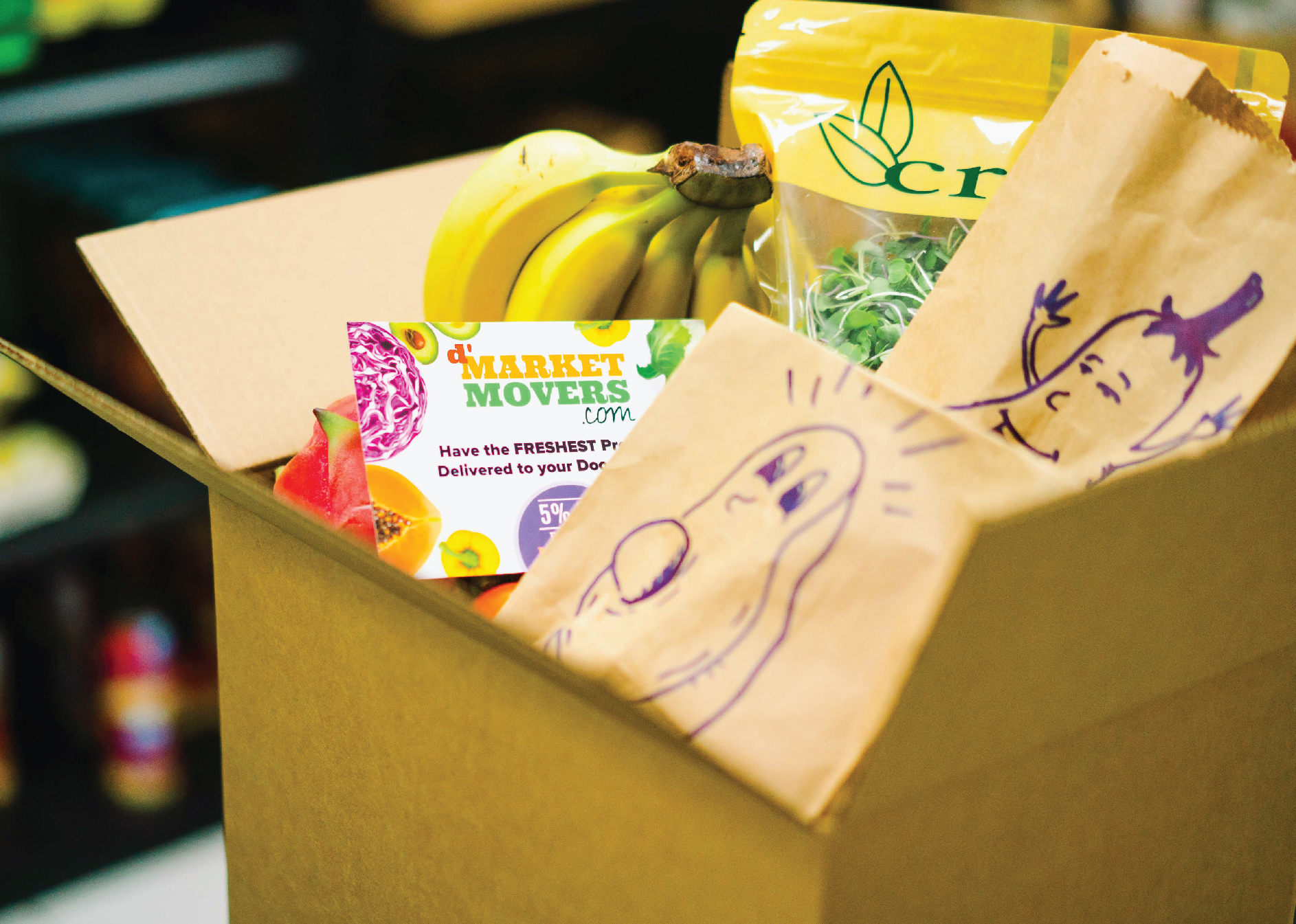
In 2009 Rachel Renie – Gonzales co-founded D’Market Movers Ltd., an innovative e-commerce platform reimagining the way we access fresh, local foods in Trinidad & Tobago and the Caribbean. She wants to collapse the distance between farm and table, between memory and appetite.
Talking to her, I remembered my own childhood rituals of food: macaroni pie every Wednesday, Soup Saturdays, my uncle’s peas and lettuce emerging with a quiet determination in the yard. Tomatoes that began as seeds in soil and ended as something warm in my hand, sweet and acid at once. These memories were never meant to be lessons from my family, but they remained in my memory.
In a country of so much land, so much possibility, it should not feel radical to imagine feeding ourselves. Yet here we are—importing, rationing, forgetting. Rachel wants us to remember.
So tell me how it all started – you and food?
Rachel: Agriculture is what my mom’s family did. My maternal grandfather grew sugarcane and rice. Growing up, my brother and I would spend half of our vacation at my mom’s side of the family and the other half at my dad’s side, because my mom is of East Indian descent and grew up in the ‘countryside’ and my dad was of African descent from ‘the city’ – in the Woodbrook area.
Out of 12 siblings, my mom was the only child to marry a non-East Indian person, so there was that separation at times. So they had my brother and I and we lived in a tiny apartment in East Port of Spain, but my mom, being a country girl, wanted to at least have a backyard for us to grow up in, so we eventually moved to Tunapuna. There we grew food in the backyard, and soon my brother wanted to become a farmer. We supported him from small grow boxes to large greenhouses. Food is what brought us together; it was a big part of all our meals, and it was a way to reconnect our families over time.
Food brings people together; togetherness is what nourishes us most.
You didn’t go into farming yourself though—you created an online food business. How did that begin?
Rachel : My first job was actually at the bank, working the night shift. I was 17, and my parents encouraged me to get a job to gain work experience while I figured out college and what I wanted to do.
That first night, I met David Thomas —my business partner and best friend. He was from Las Cuevas and would bring fish to work. I’d bring seasoning from my brother’s farm. We started packaging them together, and soon we were excited to drive all the way to Las Cuevas to pick up fish and spend time making bundles for our coworkers.
One day, David said, “You know, this could be a business.” But I was 18 and heading off to college in New York. David left the bank and bought a boat to continue the business.
What did you study in college?
Rachel : I attended Baruch College in New York and studied International Relations from 2004 to 2008.
How did studying International Relations lead you back to food?
Rachel : International Relations exposed me to a broader global context around culture and food.
I attended a lecture where my future professor spoke about global food systems. She was inspiring, and we had many conversations about culture. Everyone in my program was from different countries, and we’d have class potlucks. It became a way to explore food cultures—everyone would explain why their dish was important to their heritage. I left feeling empowered to work at the United Nations and support people like my brother and David’s brothers—farmers and fishers.
Did you get the job at the UN when you returned?
Rachel : I didn’t, and David had already left the bank and bought a boat to continue the fish business. Soon, people started asking for fresh produce too, and that’s when David started D’Market Movers. I helped him drop off forms to the bank, and when he started getting orders, I said, “All right, I’ll help you out until I get the UN job.” That job didn’t come yet, so in 2009—a year after I returned from college—I officially started the company.
We couldn’t afford a brick-and-mortar store, so I suggested building an online store. I had seen this emerging trend in New York—companies like FreshDirect were delivering fresh food straight to customers’ doors.
I built our first website in 2009, and we launched it to our customers at the bank, family, and friends. To date, we’ve sold over 1.5 million pounds of local food online.
D’Market Movers isn’t just selling food online. You’re helping farmers and food makers get their products into stores across the country. Can you explain that process?
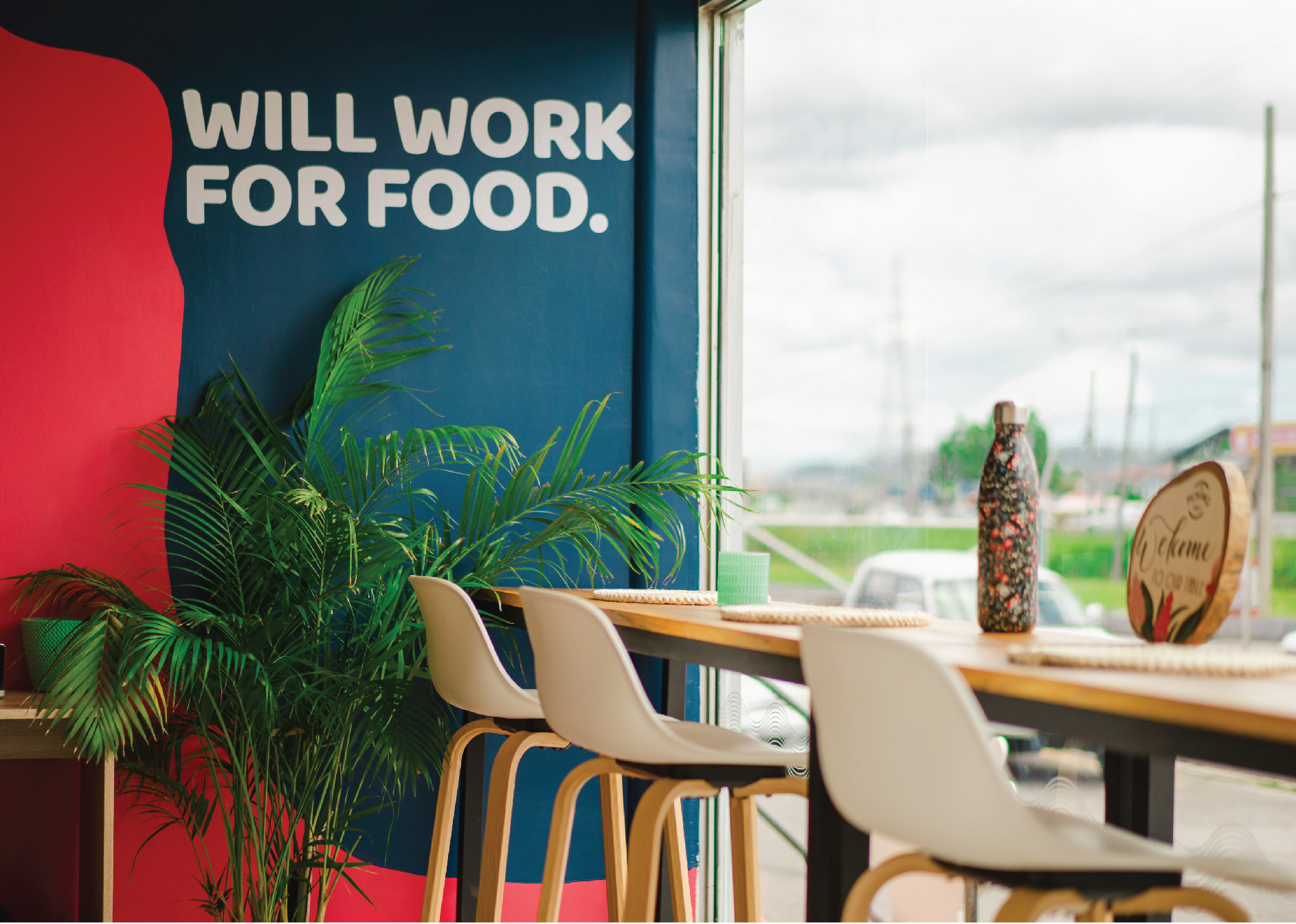
Rachel : It’s really a mantra—Will Work for Food. We work at key points throughout the agricultural value chain in the Caribbean.
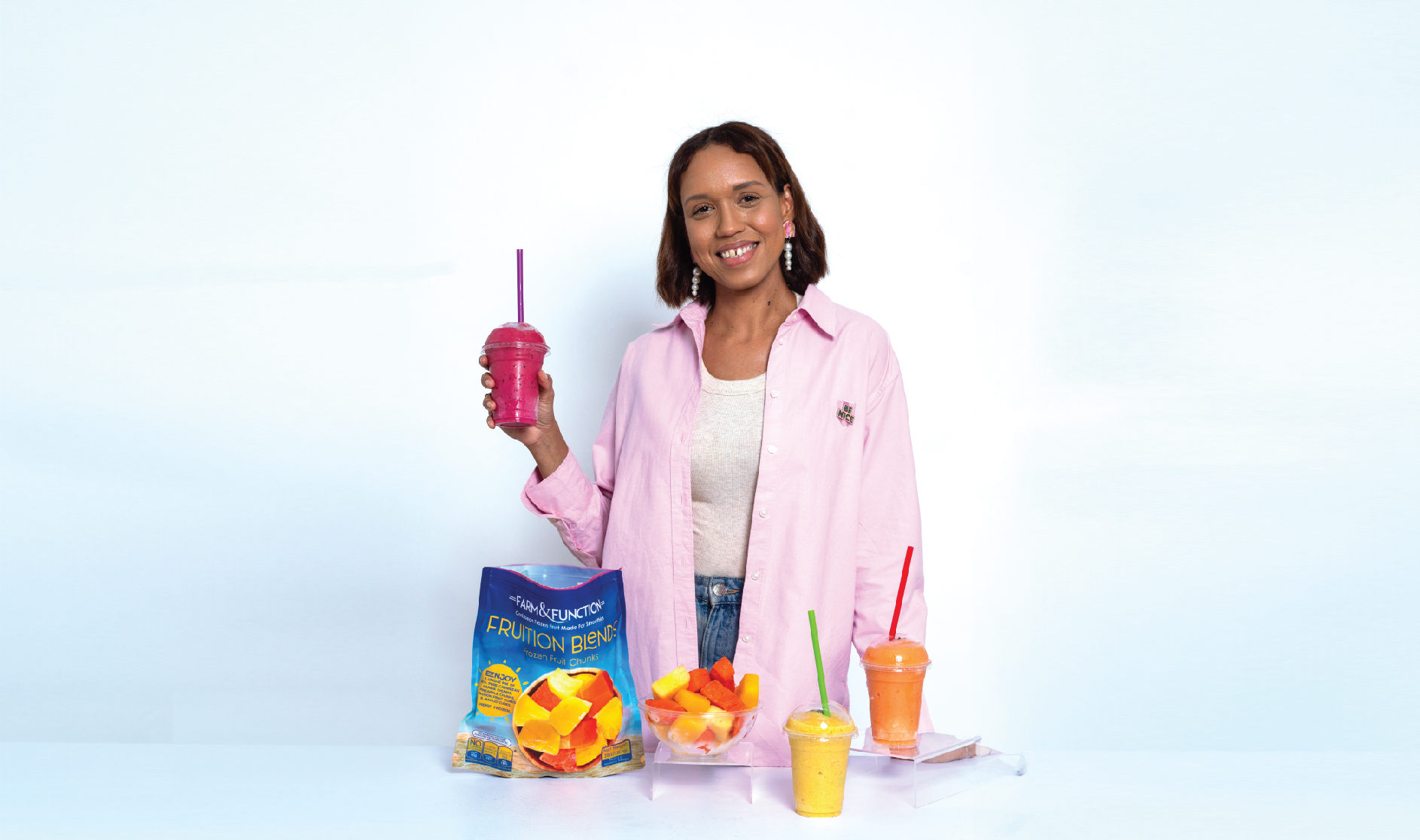
We start by working closely with farmers. We support a network of over 300 local farmers through capacity building, food safety training, cropping programs, financing, climate resilience, and more. We help them find markets for their produce and create smart contracts that feed into our online store, our agro-processing company Farm & Function Ltd., and other processors whose products we also sell.
We also support food businesses through our sister company Market Movers Design. We’ve helped hundreds of Caribbean food SMEs with branding, packaging, marketability, and compliance. I also built an online platform in partnership with IICA—www.caribbeanfoodsafety.com—to help SMEs meet food safety standards.
Who are your customers? Is it just local? What does your day-to-day look like?
Rachel : Our retail customers are global. It’s almost like food remittances—anyone connected to Trinidad & Tobago can order fresh, safe food online for their loved ones here.
We also serve wholesale and food service clients, supplying restaurants and producers with bulk produce and food inputs. Regionally, we sell to distributors who resell our Caribbean frozen fruit to other retailers.
My day varies—from online meetings to in-person presentations and conferences in different countries. I spend a lot of time managing teams and building community across our customer base. My focus is internal logistics, so I work closely with sales, marketing, and HR. I also spend time cooking and testing ingredients from our farms, integrating them into our farm-to-table café, Re:Fresh’d Café.
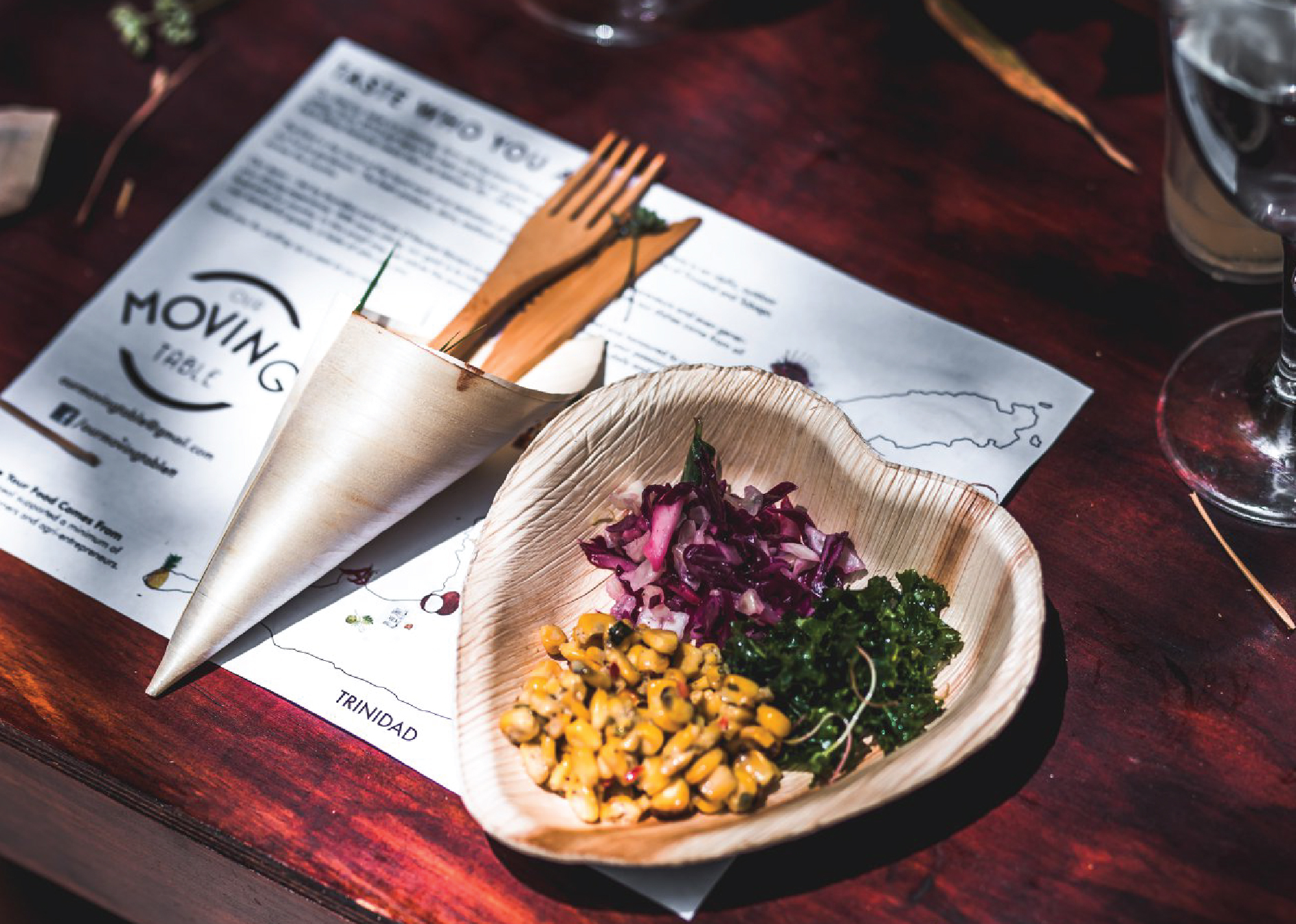
We host a monthly farm-to-table dining event called The Moving Table, where I get to do my favorite thing—host and feed people.
“I think it’s a misconception that local food is always more expensive. We’ve been told this for so long that we’ve become price-blind to what truly costs more.
There’s a higher value in eating local—less processed, lower carbon footprint, better quality ingredients, and more nutrients. These benefits help us reframe how we value local food. A great example is our Farm & Function frozen guava cubes—they have 400% more vitamin C than blueberries.”
So did you ever get your dream job at the UN?
Rachel : I did—eventually, in a roundabout way. Over the past three years, I’ve been consulting with the United Nations through agencies like FAO and ITC. I create capacity-building workshops for Caribbean entrepreneurs on branding, packaging design, food safety, grant applications, export strategies, and more.
I didn’t expect to become so passionate about SME development, but I wish I had this kind of support when I started my entrepreneurial journey. I’m now a Director at Youth Business Trinidad & Tobago and RevUp Caribbean out of Jamaica.
The number one complaint or assumption I hear about buying local is that it’s too expensive to buy local or eat healthy.
Rachel : I think it’s a misconception that local food is always more expensive. We’ve been told this for so long that we’ve become price-blind to what truly costs more.
There’s a higher value in eating local—less processed, lower carbon footprint, better quality ingredients, and more nutrients. These benefits help us reframe how we value local food. A great example is our Farm & Function frozen guava cubes—they have 400% more vitamin C than blueberries.
How do we solve this problem of education and awareness?
Rachel : Education starts at home. If every household consumed more locally grown food and planted backyard gardens, we could shift our palates away from processed imports toward whole foods—and build food security.
The government needs to promote healthy eating, especially in schools. Meals for youth should be nutritionally regulated to nourish the next generation.
Chefs and restaurant owners should be incentivized to use local ingredients. Retailers should be encouraged to stock locally made products. Franchises should be required to source a percentage of their inputs locally.
Caribbean-made products are now being exported globally. We must protect our food systems by valuing our indigenous ingredients and supporting local food businesses.
We all need to work for food—together.
Interviewer: Tanya Marie | PHOTOGRAPHY COURTESY D’MARKET MOVERS